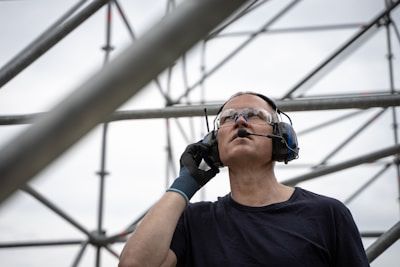
1. Active Listening
Active listening is more than just hearing words; it’s about understanding the message behind them. As a builder, your clients and team members rely on you to comprehend their needs and expectations.
Tips for Active Listening:
- Maintain eye contact to show engagement.
- Avoid interrupting while the other person is speaking.
- Summarize or paraphrase what you’ve heard to confirm understanding.
Example: If a client mentions concerns about their timeline, respond with, “So, you’re worried that the project might take longer than expected. Let’s review the schedule together.”
2. Clear and Concise Language
The construction industry is full of technical jargon. While it’s important to use precise terminology with professionals, simplify your language when speaking to clients or stakeholders who may not understand industry-specific terms.
Tips for Clarity:
- Use plain language whenever possible.
- Break down complex information into smaller, digestible parts.
- Avoid overloading conversations with unnecessary details.
Example: Instead of saying, “We’ll need to ensure compliance with NCC Volume 2 Clause 3.8.4.3,” explain, “We’ll check that the insulation meets the national building code’s standards.”
3. Non-Verbal Communication
Your body language, tone of voice, and facial expressions can convey as much information as your words. Positive non-verbal cues can help build trust and rapport.
Tips for Non-Verbal Communication:
- Keep an open posture to appear approachable.
- Use hand gestures to emphasize key points.
- Match your tone of voice to the context (e.g., calm and reassuring for client concerns).
Example: Nodding while a team member shares their input shows that you value their perspective.
4. Tailoring Communication to Your Audience
Different stakeholders have different communication preferences and levels of understanding. Adjust your approach depending on whether you’re speaking with a client, subcontractor, or inspector.
Tips for Tailoring Communication:
- For clients: Focus on outcomes and avoid technical details.
- For subcontractors: Be direct and provide clear instructions.
- For inspectors: Ensure all information is accurate and well-documented.
Example: When discussing progress with a client, say, “We’re halfway through framing the house,” rather than delving into specific tools or techniques.
5. Conflict Resolution
Conflicts are inevitable in any project, but how you handle them can determine the overall atmosphere and success of your work. Effective conflict resolution requires empathy, patience, and problem-solving skills.
Steps to Resolve Conflict:
- Listen to all parties involved without judgment.
- Identify the root cause of the conflict.
- Collaborate on finding a mutually beneficial solution.
Example: If two subcontractors disagree on the workflow, mediate by saying, “Let’s review the plan together and find a way to streamline the process for both of you.”
6. Providing Feedback
Constructive feedback helps team members improve and keeps the project on track. Aim to provide feedback that is specific, actionable, and balanced.
Tips for Effective Feedback:
- Start with positive observations.
- Be specific about what needs improvement.
- Offer solutions or suggestions for improvement.
Example: Instead of saying, “You’re too slow,” say, “I’ve noticed the tiling is taking longer than expected. Let’s discuss how we can speed up the process while maintaining quality.”
7. Documentation and Written Communication
Not all communication happens face-to-face. In the building industry, clear and thorough documentation can prevent misunderstandings and protect all parties involved.
Key Documentation Tips:
- Use email or messaging apps for updates and confirmations.
- Keep written records of client approvals and changes.
- Use visual aids like sketches or photos to enhance clarity.
Example: After a client meeting, follow up with an email summarizing what was discussed and agreed upon.
8. Encouraging Open Communication
A culture of open communication fosters trust and ensures that everyone feels comfortable sharing their concerns or ideas.
Tips for Encouraging Openness:
- Schedule regular meetings to check in with your team.
- Create an environment where feedback is welcomed.
- Lead by example by being transparent and approachable.
Example: Start weekly team meetings by asking, “Does anyone have suggestions or concerns about the current project?”
Conclusion
Created with